


As a supplier of disposable non - woven shoe covers, I often get asked about various aspects of these products. One question that comes up quite frequently is: What is the air permeability of disposable non - woven shoe covers? In this blog, I'll delve into this topic, exploring the concept of air permeability, its importance in shoe covers, and how it relates to our products.
Understanding Air Permeability
Air permeability refers to the ability of a material to allow air to pass through it. In the context of disposable non - woven shoe covers, it is a crucial characteristic. Non - woven fabrics are made by bonding or interlocking fibers together, rather than weaving them like traditional textiles. The structure of non - woven fabrics can vary significantly, which in turn affects their air permeability.
The air permeability of a material is typically measured in cubic feet per minute (CFM) or liters per square meter per second (L/m²/s). This measurement indicates how much air can flow through a given area of the material under a specific pressure differential. For disposable non - woven shoe covers, a higher air permeability generally means that the feet inside the shoe covers can "breathe" more easily.
Importance of Air Permeability in Disposable Non - woven Shoe Covers
Comfort
One of the primary reasons why air permeability is important in disposable non - woven shoe covers is comfort. When people wear shoe covers for extended periods, such as in industrial settings, hospitals, or cleanrooms, their feet can get hot and sweaty. If the shoe covers have poor air permeability, this can lead to discomfort, blisters, and an unpleasant odor. On the other hand, shoe covers with good air permeability allow moisture and heat to escape, keeping the feet dry and comfortable.
Hygiene
Good air permeability also contributes to better hygiene. Moist environments created by non - breathable shoe covers can become breeding grounds for bacteria and fungi. These microorganisms can cause foot infections and other health problems. By allowing air to circulate, disposable non - woven shoe covers with high air permeability help maintain a dry and healthy environment for the feet.
Performance
In some applications, such as in cleanrooms where static electricity can be a problem, air permeability can also affect the performance of the shoe covers. Air circulation helps to dissipate static charges, reducing the risk of electrostatic discharge (ESD) that could damage sensitive electronic components.
Factors Affecting the Air Permeability of Disposable Non - woven Shoe Covers
Fiber Type
The type of fibers used in the non - woven fabric has a significant impact on air permeability. Different fibers have different structures and properties. For example, synthetic fibers like polypropylene are commonly used in disposable non - woven shoe covers because they are lightweight, strong, and relatively inexpensive. Polypropylene fibers can be engineered to have different levels of porosity, which affects air flow. Natural fibers, such as cotton, generally have higher air permeability, but they may not be as suitable for all applications due to their lower durability and resistance to moisture.
Fabric Density
The density of the non - woven fabric is another important factor. A denser fabric with more fibers packed closely together will have lower air permeability compared to a less dense fabric. Manufacturers can control the fabric density during the production process to achieve the desired level of air permeability. However, there is a trade - off between density and other properties such as strength and durability.
Manufacturing Process
The manufacturing process used to produce the non - woven fabric also plays a role in air permeability. Processes like thermal bonding, chemical bonding, and needle punching can create different fabric structures. For example, needle punching can create a more open and porous structure, which generally results in higher air permeability.
Our Disposable Non - woven Shoe Covers and Air Permeability
At our company, we understand the importance of air permeability in disposable non - woven shoe covers. We offer a wide range of shoe covers with different levels of air permeability to meet the diverse needs of our customers.
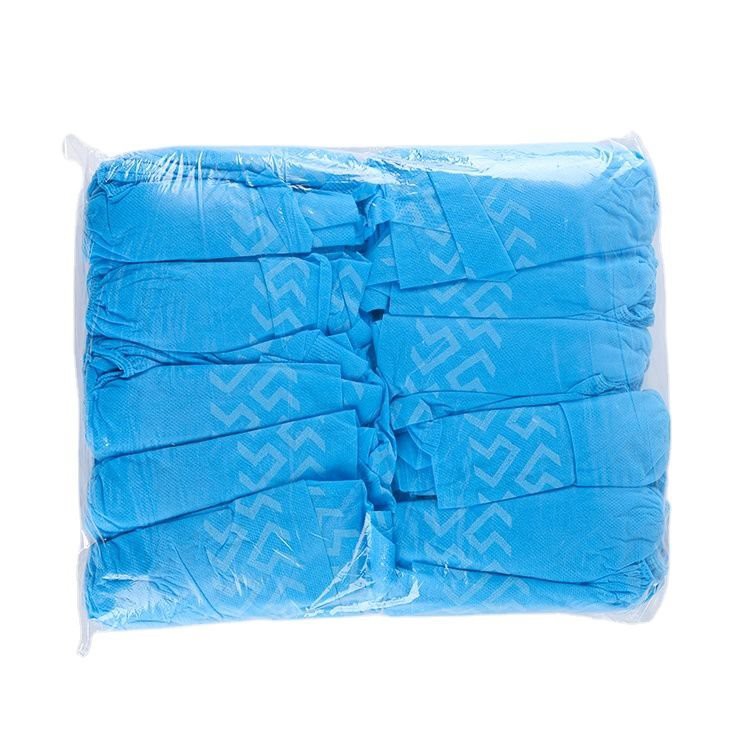
Our Disposable Non - Woven Printed Shoe Cover is not only aesthetically pleasing but also designed with a focus on comfort. The non - woven fabric used in these shoe covers has been carefully selected and engineered to provide a good balance between air permeability and printability. This means that you can have custom - printed shoe covers without sacrificing the comfort of your feet.
The Disposable Non - woven Fabric Full Rib Shoe Cover features a unique ribbed design that enhances air circulation. The ribs create channels for air to flow, increasing the overall air permeability of the shoe cover. This design is especially beneficial for applications where people need to stand or walk for long periods.
For those in need of waterproof protection, our Disposable Protective Waterproof Shoe Covers are also designed to maintain a certain level of air permeability. We use advanced waterproofing technologies that do not completely block air flow, ensuring that the feet remain comfortable even in wet conditions.
Measuring and Testing Air Permeability
To ensure the quality and performance of our disposable non - woven shoe covers, we conduct rigorous air permeability testing. We use industry - standard testing methods to measure the air flow through the fabric under controlled conditions. This allows us to accurately determine the air permeability of each batch of shoe covers and ensure that they meet our quality standards.
Conclusion
In conclusion, air permeability is a critical characteristic of disposable non - woven shoe covers. It affects comfort, hygiene, and performance. As a supplier, we are committed to providing high - quality shoe covers with optimal air permeability. Whether you need shoe covers for industrial use, medical applications, or cleanroom environments, we have the right product for you.
If you are interested in learning more about our disposable non - woven shoe covers or would like to discuss your specific requirements, please feel free to contact us. We look forward to working with you to find the best shoe cover solutions for your needs.

References
- ASTM D737 - 04(2019), Standard Test Method for Air Permeability of Textile Fabrics.
- ISO 9237:1995, Textiles -- Determination of the air permeability of fabrics.
- "Nonwovens: Technology, Materials, and Applications" by David J. Vaughn.