


How does a KN95 mask work?
As a KN95 mask supplier, I've been deeply involved in understanding and providing these essential protective gears. The KN95 mask is a type of respirator that has gained significant attention, especially in the context of public health concerns. In this blog, I'll delve into the science behind how a KN95 mask works and why it's an effective tool for protection.

The Basics of Filtration
At the heart of a KN95 mask's functionality is its filtration mechanism. The "95" in KN95 indicates that the mask is designed to filter out at least 95% of airborne particles that are 0.3 microns in diameter. This standard is similar to the N95 mask used in the United States, with the main difference being that KN95 is a Chinese standard, while N95 follows the U.S. National Institute for Occupational Safety and Health (NIOSH) regulations.
The mask achieves this high - level filtration through a combination of physical and electrostatic processes. The outer layer of the KN95 mask is typically made of a non - woven polypropylene material. This layer acts as a barrier against large droplets, such as those produced when someone coughs or sneezes. It also helps to prevent the mask from getting wet, which could otherwise compromise its filtration efficiency.
The middle layer is the key filtration component. It consists of a melt - blown polypropylene fabric. This fabric has a very fine fiber structure that creates a maze - like path for air to pass through. When airborne particles try to move through this layer, they are subject to several filtration mechanisms.
One of the primary mechanisms is inertial impaction. Larger particles, due to their mass and momentum, are unable to follow the curved path of the air flow around the fibers. Instead, they collide with the fibers and are trapped. This is particularly effective for particles larger than 1 micron.
Another important mechanism is interception. Smaller particles that come close enough to the fibers as they follow the air flow are intercepted by the fibers and adhere to them. This is significant for particles in the range of 0.1 - 1 micron.
The third mechanism is diffusion. The smallest particles, especially those less than 0.1 microns, move randomly in the air due to Brownian motion. As they move, they collide with the fibers and are captured.
In addition to these physical mechanisms, the melt - blown polypropylene fabric in the middle layer is often electrostatically charged. This electrostatic charge enhances the filtration efficiency by attracting and holding charged particles. Even neutral particles can be polarized by the electrostatic field of the fibers and then be attracted to the fibers. This is crucial for capturing the smallest particles, such as viruses, which are typically in the range of 0.02 - 0.3 microns.
The inner layer of the KN95 mask is also made of a non - woven polypropylene material. It is designed to be soft and comfortable against the skin, while also providing some additional filtration and preventing irritation to the wearer's face.
Seal and Fit
The effectiveness of a KN95 mask also depends on its seal and fit. A proper seal is essential because if air can leak in around the edges of the mask, unfiltered air will bypass the filtration layer, reducing the mask's protective capabilities.
KN95 masks are designed to fit snugly around the face. They usually have a nose clip made of a malleable metal, such as aluminum. The wearer can shape the nose clip to fit the contour of their nose, preventing air from leaking out or in through the top of the mask. The ear loops or headbands are adjusted to ensure that the mask is held firmly in place on the face.
When fitting a KN95 mask, it's important to perform a fit check. The wearer can cover the mask with their hands and inhale sharply. If air leaks in around the edges, the mask needs to be readjusted. Exhaling sharply while covering the mask should also not result in air leaking out around the edges.
A good fit not only improves the filtration efficiency but also makes the mask more comfortable to wear for an extended period. When the mask fits well, the wearer doesn't have to constantly adjust it, and they can breathe more easily through the mask.
Comparing with Other Masks
There are many types of masks available in the market, and it's important to understand how the KN95 mask compares to others.
Surgical masks, for example, are commonly used in medical settings. While they are effective at blocking large droplets and splashes, they are not designed to provide the same level of filtration as a KN95 mask. Surgical masks typically have a lower filtration efficiency, especially for small particles. They also do not have a tight seal around the face, so there is more potential for air leakage.
Cloth masks are another popular option. They are reusable and can be made in a variety of styles. However, their filtration efficiency is generally lower than that of KN95 masks. Cloth masks are better at preventing large droplets from spreading but may not be as effective at filtering small airborne particles.
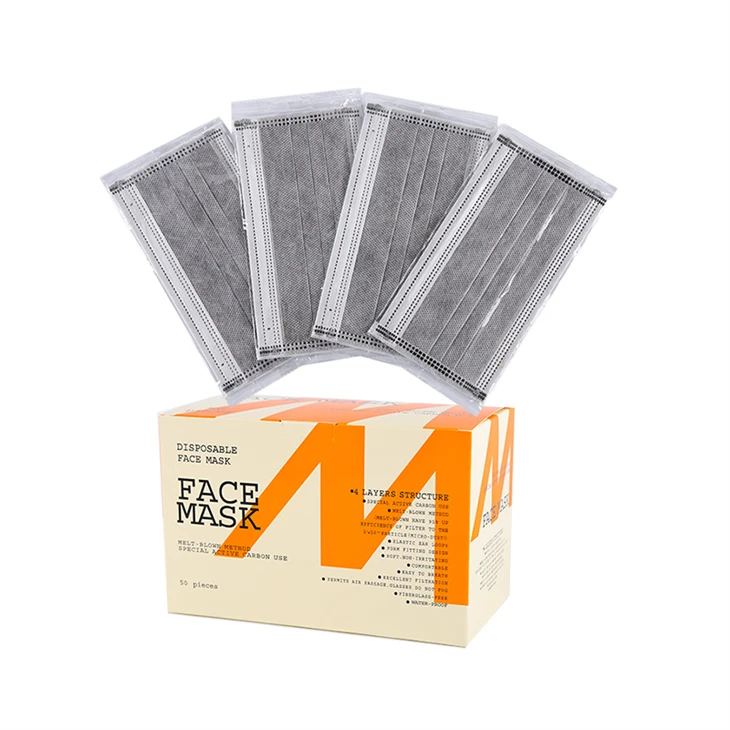
If you are looking for high - quality disposable masks, we offer a range of products. Check out our Disposable Black Medical Face Masks, Disposable 4ply Carbon Activated Face Mask, and Disposable Black 3ply Mask. These masks are designed with high - quality materials and advanced manufacturing techniques to provide reliable protection.
Importance in Different Settings
KN95 masks are highly valuable in various settings. In healthcare settings, they are used by medical professionals to protect themselves from infectious diseases. For example, during the COVID - 19 pandemic, healthcare workers relied on KN95 masks to prevent the inhalation of virus - laden particles.
In public settings, such as crowded places like supermarkets, buses, and trains, wearing a KN95 mask can significantly reduce the risk of inhaling airborne pathogens. It also helps to protect others by reducing the spread of droplets from the wearer.
For individuals who are at a higher risk of severe illness, such as the elderly or those with underlying health conditions, wearing a KN95 mask can provide an extra layer of protection when they need to go out.
Maintenance and Usage
To ensure the continued effectiveness of a KN95 mask, proper maintenance and usage are important. The mask should be stored in a clean, dry place when not in use. If the mask gets wet or dirty, it should be replaced.
It's also important to handle the mask correctly. When putting on or taking off the mask, the wearer should avoid touching the front of the mask, as this could contaminate the mask or transfer pathogens to their hands. Instead, they should use the ear loops or headbands to adjust the mask.
Conclusion
In conclusion, the KN95 mask is a highly effective protective device. Its advanced filtration mechanism, combined with a proper seal and fit, makes it capable of filtering out a high percentage of airborne particles, including viruses. Whether you are a healthcare professional, a member of the general public, or someone at high risk, a KN95 mask can provide you with reliable protection.
If you are interested in purchasing high - quality KN95 masks or any of our other mask products, such as the Disposable Black Medical Face Masks, Disposable 4ply Carbon Activated Face Mask, or Disposable Black 3ply Mask, please feel free to contact us for procurement and further discussions. We are committed to providing you with the best products and services to meet your protective needs.
References
- American Society for Testing and Materials (ASTM). "Standard Specification for Performance of Materials Used in Medical Face Masks."
- Centers for Disease Control and Prevention (CDC). "How to Select and Use Masks."
- World Health Organization (WHO). "Mask Use in the Context of COVID - 19."