


Disposable protective clothing has become an essential item in various industries, from healthcare to manufacturing, due to its convenience and cost - effectiveness. One of the most critical questions regarding this type of clothing is whether it can effectively protect against bacteria. As a supplier of disposable protective clothing, I have in - depth knowledge of the products and the science behind their protective capabilities.
Understanding Bacteria and the Need for Protection
Bacteria are single - celled microorganisms that can be found everywhere in our environment. While many bacteria are harmless or even beneficial, some can cause serious diseases. In settings such as hospitals, laboratories, and food processing plants, the risk of exposure to harmful bacteria is high. Disposable protective clothing is designed to act as a physical barrier between the wearer and the external environment, reducing the chances of bacterial contamination.
The Structure and Material of Disposable Protective Clothing
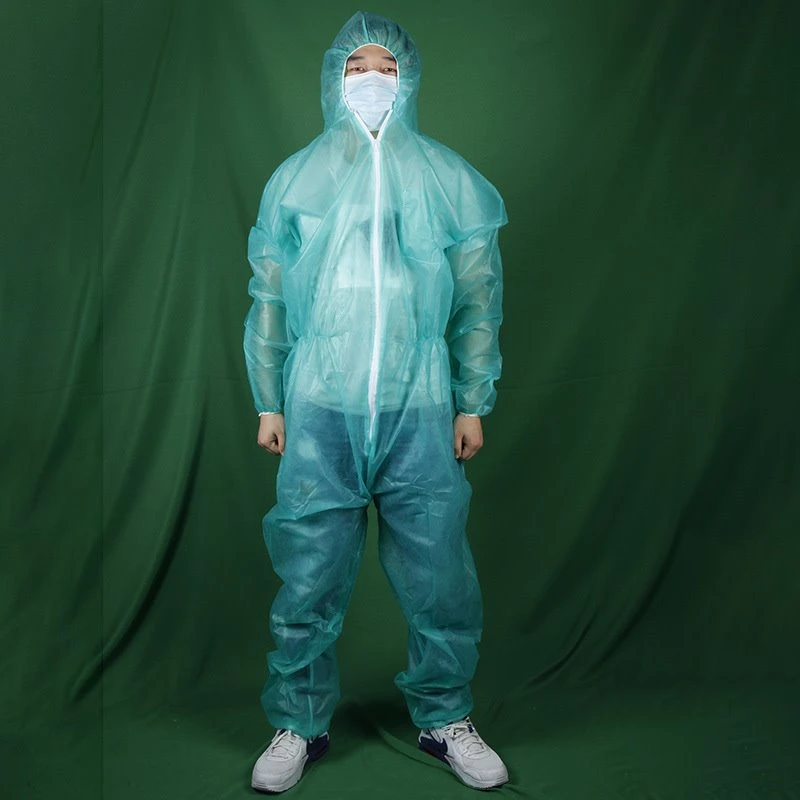
Disposable protective clothing is typically made from non - woven materials. These materials are engineered to have specific properties that contribute to their protective function. For example, PP Non - Woven One - piece Protective Clothing is made from polypropylene non - woven fabric. Polypropylene is a synthetic polymer that has good chemical resistance and can be processed to form a fine - fiber structure.
The fine fibers in non - woven materials create a network of pores. The size of these pores is crucial in determining the clothing's ability to block bacteria. Most bacteria range in size from 0.5 to 5 micrometers. A well - designed non - woven fabric for protective clothing will have pore sizes smaller than the average size of bacteria, effectively preventing them from passing through.
Testing the Bacterial Barrier Function
To ensure the effectiveness of disposable protective clothing against bacteria, various testing methods are employed. One common test is the ASTM F1671 Standard Test Method for Resistance of Materials Used in Protective Clothing to Penetration by Blood - Borne Pathogens Using Phi - X174 Bacteriophage as a Surrogate. This test uses a bacteriophage (a virus that infects bacteria) as a surrogate for blood - borne pathogens. The clothing sample is challenged with the bacteriophage, and the amount of penetration is measured.
Another test is the ISO 22610:2005, which assesses the resistance of protective clothing materials to the penetration of synthetic blood under hydrostatic pressure. These tests provide objective data on the clothing's ability to prevent the passage of bacteria and other potentially harmful substances.
Different Types of Disposable Protective Clothing and Their Bacterial Protection
We offer several types of disposable protective clothing, each with its own level of protection.
PP Non - Woven One - piece Protective Clothing
PP Non - Woven One - piece Protective Clothing is a popular choice for general - purpose protection. It provides a basic level of protection against bacteria and other contaminants. The polypropylene non - woven fabric has a relatively tight structure that can block a significant amount of bacteria. It is lightweight and breathable, making it comfortable for long - term wear. However, it may not be suitable for high - risk environments where a higher level of protection is required.
SMS Disposable One - piece Protective Coverall
The SMS Disposable One - piece Protective Coverall is made from a spunbond - meltblown - spunbond composite non - woven fabric. The meltblown layer in the middle has a very fine fiber structure, which significantly enhances the clothing's filtration efficiency. This type of clothing offers a higher level of protection against bacteria compared to the PP non - woven clothing. It is often used in healthcare settings, cleanrooms, and other environments where strict hygiene standards are necessary.
SF Disposable Microporous Protective Coverall
The SF Disposable Microporous Protective Coverall is designed for the most demanding applications. It has a microporous film laminated to a non - woven fabric. The microporous structure allows for breathability while still providing excellent protection against bacteria, viruses, and other hazardous substances. This type of clothing is commonly used in chemical handling, pharmaceutical manufacturing, and high - risk healthcare procedures.
Limitations of Disposable Protective Clothing
While disposable protective clothing can provide a high level of protection against bacteria, it is not without limitations. The integrity of the clothing can be compromised if it is damaged, such as by tears or punctures. Improper donning and doffing procedures can also lead to contamination. Additionally, the clothing's effectiveness may decrease over time, especially if it is exposed to moisture or other environmental factors that can degrade the material.

Maintaining the Effectiveness of Disposable Protective Clothing
To ensure the maximum protection against bacteria, proper use and maintenance of disposable protective clothing are essential. The clothing should be inspected for any damage before use. It should be worn in accordance with the manufacturer's instructions, including proper donning and doffing procedures. After use, the clothing should be disposed of properly to prevent the spread of bacteria.
Conclusion
In conclusion, disposable protective clothing can effectively protect against bacteria when it is made from high - quality materials and is used correctly. Different types of clothing offer different levels of protection, allowing users to choose the appropriate option based on their specific needs. As a supplier of disposable protective clothing, we are committed to providing products that meet the highest standards of quality and performance.
If you are in need of reliable disposable protective clothing for your business, whether it's for general - purpose use or high - risk environments, we would be glad to discuss your requirements. Contact us to start a procurement discussion and find the best solution for your bacterial protection needs.
References
- ASTM International. (2013). ASTM F1671 - 13: Standard Test Method for Resistance of Materials Used in Protective Clothing to Penetration by Blood - Borne Pathogens Using Phi - X174 Bacteriophage as a Surrogate.
- International Organization for Standardization. (2005). ISO 22610:2005: Protective clothing - Determination of resistance to penetration by synthetic blood (fixed - volume method) under hydrostatic pressure.
- Brown, I., & Booth, J. (2007). Protective clothing and equipment. In Principles and Practice of Disinfection, Preservation and Sterilization (3rd ed., pp. 499 - 518). Blackwell Publishing.