


Hey there! As a shoe cover supplier, I've been getting a lot of questions lately about whether shoe covers have a good grip on slippery surfaces. It's a super important question, especially for industries where safety is a top priority, like healthcare, construction, and food processing. So, let's dive right in and explore this topic together.
First off, it's essential to understand the factors that affect the grip of shoe covers on slippery surfaces. The surface texture of the shoe cover itself plays a huge role. Most shoe covers are made from materials like plastic, non - woven fabric, or rubber. Each material has its own unique properties when it comes to grip.
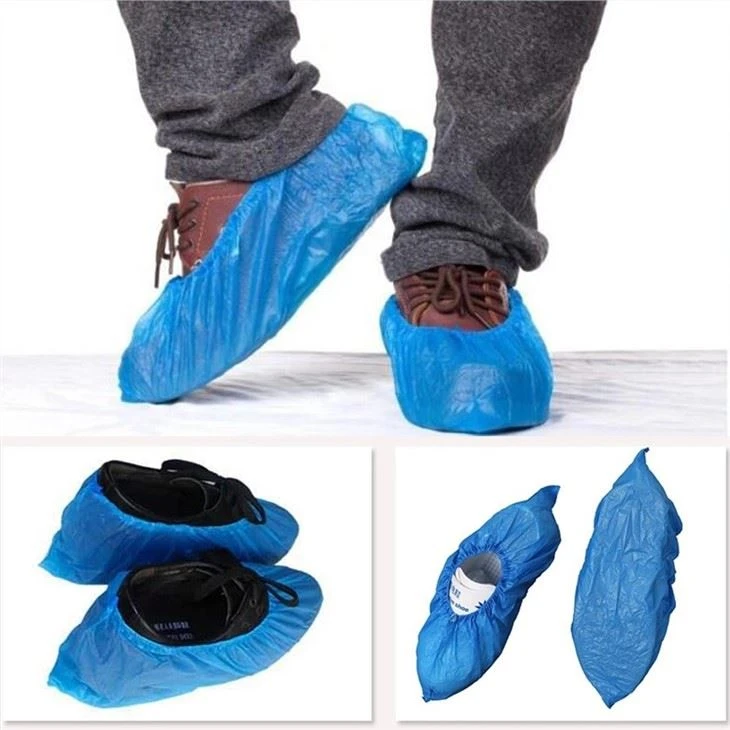
Plastic shoe covers are pretty common. They're lightweight, disposable, and affordable. But when it comes to grip on slippery surfaces, they can be a bit hit or miss. Some plastic shoe covers have a smooth surface, which doesn't provide much friction. However, there are also plastic shoe covers with textured surfaces designed to improve grip. For example, the Disposable Shoe Covers Plastic Material we offer have a specially engineered texture that helps increase traction on wet or greasy floors.
Non - woven shoe covers are another popular option. They're often used in cleanroom environments and are known for their breathability and dust - resistance. In terms of grip, non - woven materials usually have a more porous and fibrous surface compared to plastic. This can give them a better grip on some surfaces, but they may not be as effective on extremely slippery floors, like those covered in oil or water.
Rubber shoe covers are generally considered to have the best grip. Rubber is a natural material with high friction, which means it can stick to surfaces better. Rubber shoe covers are often used in heavy - duty industries where workers are constantly exposed to wet or oily conditions. They can be more expensive and less disposable than plastic or non - woven shoe covers, but the enhanced safety they provide is often worth the cost.
Now, let's talk about the science behind grip. Grip is all about friction. Friction is the force that resists the relative motion between two surfaces in contact. When a shoe cover comes into contact with a slippery surface, the friction between them determines how well the shoe cover can grip. There are two main types of friction: static friction and kinetic friction. Static friction is the force that keeps an object at rest on a surface, while kinetic friction is the force that opposes the motion of an object already in motion.
On a slippery surface, the key is to increase the static friction. This can be achieved by increasing the roughness of the shoe cover's surface or by using materials with high friction coefficients. For example, some shoe covers have raised patterns or studs on the sole, which can dig into the surface and create more friction points.
Another factor to consider is the pressure applied on the shoe cover. When a person walks, the weight of their body is distributed across the sole of the shoe cover. The greater the pressure, the more friction can be generated. However, if the surface is too slippery, even a large amount of pressure may not be enough to prevent slipping.
To test the grip of shoe covers on slippery surfaces, manufacturers often use special equipment. They simulate different types of slippery conditions, such as wet floors, oily surfaces, and icy patches. The shoe covers are then tested by measuring the amount of force required to make them slide. This helps to determine the effectiveness of the shoe cover's grip.
In real - world scenarios, the performance of shoe covers can also be affected by other factors. For example, the way a person walks can impact the grip. A person who takes long, quick steps may be more likely to slip than someone who takes short, careful steps. Also, the type of footwear worn under the shoe cover can make a difference. A shoe with a smooth sole may not provide as much support for the shoe cover as a shoe with a textured sole.
When it comes to choosing the right shoe cover for a specific application, it's important to consider the type of slippery surface the workers will be exposed to. If it's a wet floor, a shoe cover with a good grip on water - resistant surfaces is needed. If it's an oily surface, a shoe cover made from a material that can resist oil and provide traction is essential.
As a shoe cover supplier, I've seen firsthand the importance of providing high - quality, reliable shoe covers. We work hard to ensure that our products meet the highest safety standards. Our Disposable Shoe Covers Plastic Material are designed with the latest technology to provide the best possible grip on a variety of surfaces.
We also understand that every customer has different needs. That's why we offer a wide range of shoe covers in different materials, sizes, and designs. Whether you're looking for a disposable option for a one - time use or a more durable shoe cover for long - term use, we've got you covered.
If you're in the market for shoe covers and are concerned about grip on slippery surfaces, I'd love to help. Our team of experts can provide you with detailed information about our products and help you choose the right shoe covers for your specific needs. We can also offer samples for you to test in your own environment.
Don't compromise on safety. Make sure your workers are protected with shoe covers that have a good grip on slippery surfaces. Whether you're in the healthcare industry, construction, food processing, or any other field where safety is crucial, we have the shoe covers you need.
Contact us today to start a conversation about your shoe cover requirements. Let's work together to find the best solution for your business.
References
- Physics textbooks on friction and surface interaction
- Industry reports on shoe cover safety and performance
- Manufacturer's data sheets on shoe cover materials and design