


As a KN95 mask supplier, one question I often get asked is whether a KN95 mask can be used for welding. This is a crucial query as the safety of workers in welding environments is of utmost importance. In this blog, we'll delve into the details to determine if a KN95 mask is a suitable option for welding and explore other alternatives if necessary.
Understanding the Function of KN95 Masks
KN95 masks are a type of respiratory protective equipment that is designed to filter out at least 95% of airborne particles with a diameter of 0.3 microns or larger. They are commonly used in various settings to protect against dust, pollen, and some viruses. The design of a KN95 mask includes multiple layers of non - woven fabric, which work together to trap particles as air passes through.
Hazards in Welding Environments
Welding is a complex process that generates a variety of hazards. The most obvious ones are fumes and gases. Welding fumes are a mixture of tiny solid particles and liquid droplets that are formed when the metal is heated and vaporized. These fumes can contain harmful substances such as manganese, chromium, nickel, and lead. In addition, welding also produces gases like carbon monoxide, ozone, and nitrogen oxides, which can be extremely dangerous if inhaled in high concentrations.

Another hazard in welding is the presence of ultraviolet (UV) and infrared (IR) radiation. Prolonged exposure to UV and IR radiation can cause damage to the eyes and skin, leading to conditions like arc eye and skin burns.
Can a KN95 Mask Protect Against Welding Hazards?
Let's first consider the protection against welding fumes. A KN95 mask can indeed filter out a significant amount of the solid particles present in welding fumes. Since the mask is rated to filter 95% of particles with a diameter of 0.3 microns or larger, it can capture many of the larger metal particles in the fumes. However, welding fumes also contain smaller particles and may have chemical components that a standard KN95 mask is not designed to handle.
When it comes to the gases produced during welding, a KN95 mask is not effective. KN95 masks are particulate filters and do not have the ability to adsorb or neutralize gases. Inhaling gases like carbon monoxide or nitrogen oxides can have serious health consequences, including headaches, dizziness, nausea, and in severe cases, even death.
Regarding the UV and IR radiation, a KN95 mask offers no protection at all. Specialized welding helmets and face shields are required to safeguard the eyes and face from the harmful effects of radiation.
Limitations of Using a KN95 Mask for Welding
While a KN95 mask can provide some basic protection against welding fumes, its limitations are significant. The lack of gas filtration means that workers are still at risk of inhaling toxic gases. Additionally, the fit of a KN95 mask may not be sufficient in a welding environment. Welding often involves physical movement and the generation of air currents, which can cause the mask to shift and create gaps, allowing unfiltered air to enter.
Alternatives to KN95 Masks for Welding
If you are involved in welding, it is recommended to use a more comprehensive respiratory protection system. One option is a powered air - purifying respirator (PAPR). A PAPR uses a battery - powered fan to draw air through a filter and deliver clean air to the user. These filters can be specifically designed to remove both particles and gases, providing much higher levels of protection compared to a KN95 mask.
Another alternative is a supplied - air respirator (SAR). An SAR provides the user with a continuous supply of clean air from an external source, such as a compressor or an air tank. This type of respirator is ideal for environments where the concentration of harmful substances is very high.
In addition to respiratory protection, proper eye and face protection is also essential. Welding helmets with auto - darkening filters are commonly used to protect the eyes from UV and IR radiation, while face shields can provide additional protection for the face.
Our Product Range
As a KN95 mask supplier, we also offer a variety of other disposable face masks that may be suitable for different applications. For example, our Disposable Face Mask with Tie - on provides a simple and cost - effective solution for general protection against dust and light particles. The tie - on design ensures a secure fit, making it suitable for a range of work environments.
Our Edge Cover Ear - loop Face Mask is designed with an edge cover that helps to prevent air leakage. It is lightweight and comfortable to wear, making it a popular choice for workers who need to wear a mask for extended periods.
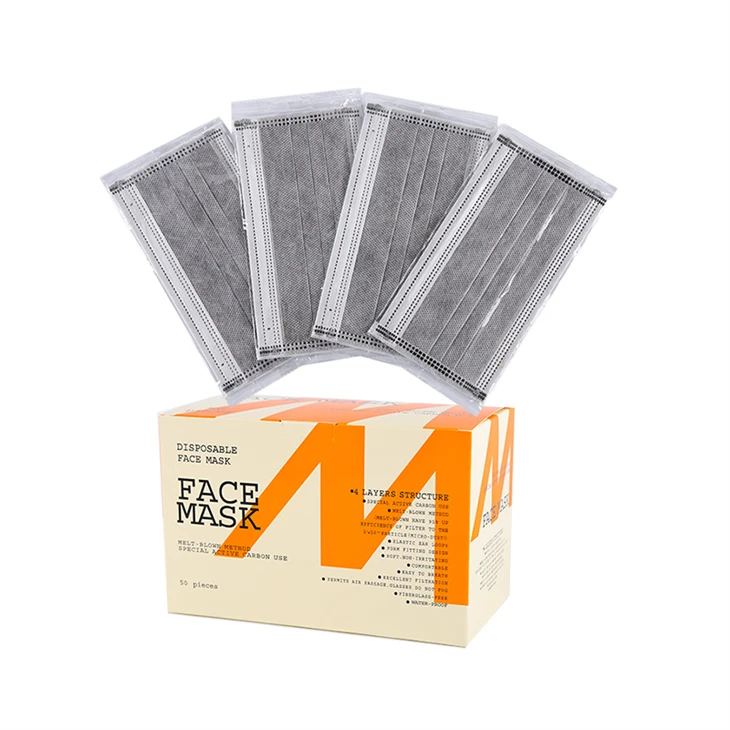
If you are looking for a mask with additional filtration capabilities, our Disposable 4ply Carbon Activated Face Mask is a great option. The activated carbon layer can help to adsorb some odors and certain chemicals, providing an extra level of protection.
Conclusion
In conclusion, while a KN95 mask can provide some basic protection against welding fumes, it is not sufficient for comprehensive protection in a welding environment. The presence of gases and radiation requires specialized equipment such as PAPRs, SARs, welding helmets, and face shields. However, our range of other disposable face masks can be useful in less hazardous work environments.
If you are interested in our products or have any questions about respiratory protection, we encourage you to contact us for procurement discussions. We are committed to providing high - quality products and professional advice to meet your safety needs.
References
- American Welding Society. (20XX). Welding Safety and Health Handbook.
- Occupational Safety and Health Administration. (20XX). Respiratory Protection Standards.
- Centers for Disease Control and Prevention. (20XX). Guidelines for Respiratory Protection in the Workplace.