


In the realm of personal protective equipment and hygiene products, disposable non-woven shoe covers have become an essential item in various settings, from medical facilities to industrial workplaces and even in some domestic scenarios. As a supplier of disposable non-woven shoe covers, I often receive inquiries about the safety standards associated with these products. This blog post aims to delve into the existence, details, and importance of safety standards for disposable non-woven shoe covers.
The Need for Safety Standards
Disposable non-woven shoe covers serve multiple purposes, but chief among them is the protection of the wearer and the environment. In a medical setting, for example, they prevent the spread of pathogens from one area to another. In industrial environments, they protect workers' feet from chemicals, sharp objects, and dust. In clean rooms or food processing facilities, they maintain the sterility and cleanliness of the workspace.
Without proper safety standards, the effectiveness of these shoe covers could be severely compromised. Substandard products may not provide adequate protection, leading to potential health risks for the wearer and contamination of the surrounding area. Therefore, safety standards act as a benchmark to ensure that the shoe covers meet certain quality and performance criteria.

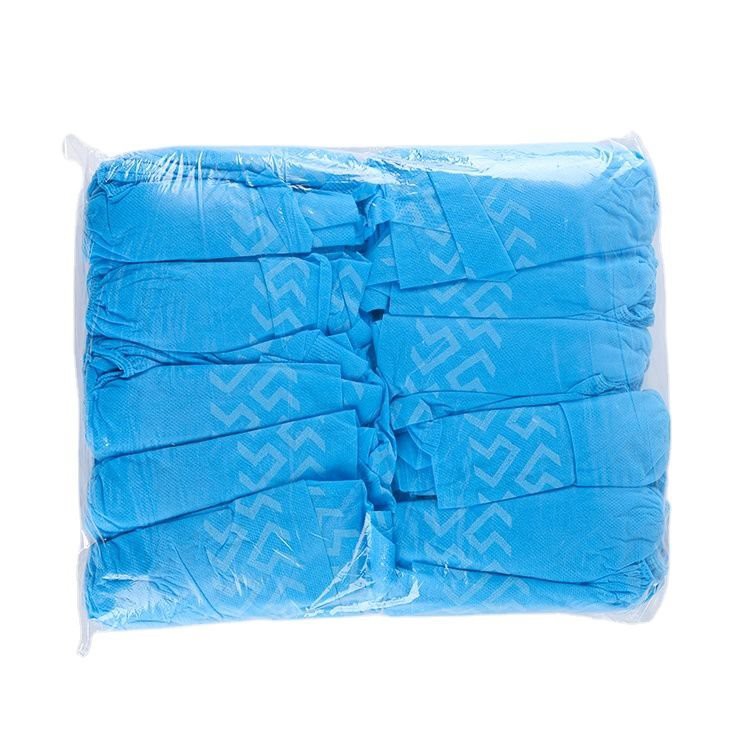
Existing Safety Standards
There are indeed several safety standards that govern the production and use of disposable non-woven shoe covers. These standards vary depending on the region and the specific application of the shoe covers.
International Standards
- ISO Standards: The International Organization for Standardization (ISO) has developed a series of standards related to personal protective equipment (PPE). While there may not be a specific ISO standard dedicated solely to disposable non-woven shoe covers, general PPE standards such as ISO 13688:2013, which provides general requirements for the design and construction of PPE, can be applied. These standards cover aspects such as material quality, durability, and the overall design of the product to ensure its effectiveness in providing protection.
- EN Standards: In Europe, the European Committee for Standardization (CEN) has established a set of standards known as EN standards. For example, EN 345:2011 is related to safety footwear for professional use. Although this standard is mainly for non-disposable safety shoes, some of its principles can be applied to disposable shoe covers, especially in terms of protecting the feet from mechanical hazards.
Regional and Industry - Specific Standards
- Medical Standards: In the medical field, countries have their own regulations. In the United States, the Food and Drug Administration (FDA) regulates disposable non-woven shoe covers as a type of medical device if they are intended for use in medical procedures. To meet FDA requirements, the shoe covers must demonstrate safety and effectiveness in preventing the spread of contaminants. Similar regulations exist in other countries, such as the Medical Device Regulation (MDR) in the European Union.
- Industrial Standards: Industries such as chemical manufacturing, construction, and electronics manufacturing have their own safety requirements. For example, in the chemical industry, shoe covers must be resistant to certain chemicals. Standards like ASTM D5338 (Standard Test Method for Determining Aerobic Biodegradation of Plastic Materials under Controlled Composting Conditions) may be relevant if the shoe covers are made from biodegradable non-woven materials.
Components of Safety Standards
Material Quality
The quality of the non-woven material is crucial. It should be strong enough to withstand normal use without tearing easily. For example, in medical settings where healthcare workers are constantly moving, a shoe cover that tears easily can expose the feet to pathogens. The material should also be breathable to prevent discomfort and sweating, which could lead to skin problems over time.
Protection Against Hazards
- Liquid Resistance: In environments where there is a risk of exposure to liquids, such as in a laboratory or a food processing plant, the shoe covers should have a certain level of liquid resistance. This can be measured by testing the penetration of liquids through the material. Our Disposable Waterproof Long Shoe Cover is designed to provide excellent liquid resistance, protecting the wearer's feet from spills and splashes.
- Mechanical Resistance: In industrial settings, there may be a risk of sharp objects or heavy machinery. The shoe covers should be able to resist punctures and abrasions. This is achieved through the use of appropriate non-woven materials and reinforcement techniques.
- Microbial Resistance: In medical and cleanroom environments, the shoe covers should have some level of microbial resistance to prevent the growth and spread of bacteria and viruses. Some non - woven materials can be treated with antimicrobial agents to achieve this.
Fit and Comfort
A proper fit is essential for the effectiveness of the shoe covers. They should be easy to put on and take off, and they should stay in place during movement. Too loose a shoe cover may fall off, while too tight a one can cause discomfort and restrict blood circulation. Additionally, comfort is an important factor, especially for workers who need to wear the shoe covers for long periods.
Our Compliance with Safety Standards
As a supplier of disposable non-woven shoe covers, we are committed to meeting and exceeding safety standards. We source high-quality non-woven materials from reputable suppliers and conduct rigorous quality control tests at every stage of the production process. Our Disposable Non-Woven Printed Shoe Cover not only meets the aesthetic needs of our customers but also adheres to all relevant safety standards.
We work closely with regulatory authorities and industry experts to stay updated on the latest safety requirements. Our production facilities are equipped with state-of-the-art machinery and technology to ensure the consistency and quality of our products. Whether it's for medical, industrial, or domestic use, our shoe covers are designed to provide the highest level of protection.
Contact for Purchase and Collaboration
If you are in the market for high-quality disposable non-woven shoe covers that comply with all relevant safety standards, we invite you to reach out to us for a purchase discussion. Our team of experts is ready to assist you in finding the right product for your specific needs, whether it's our Disposable Protective Waterproof Shoe Covers or any other type of shoe cover in our range.
References
- ISO 13688:2013, General requirements for the design and construction of protective clothing
- EN 345:2011, Safety footwear for professional use
- U.S. Food and Drug Administration regulations on medical devices
- European Union Medical Device Regulation (MDR)
- ASTM D5338 - Standard Test Method for Determining Aerobic Biodegradation of Plastic Materials under Controlled Composting Conditions