


Hey there! I'm a supplier of Disposable Non - woven Sleeves, and today I wanna talk about a question that often pops up: Are disposable non - woven sleeves resistant to abrasion?
First off, let's get into what disposable non - woven sleeves are. These sleeves are made from non - woven fabrics, which are basically webs of fibers bonded together through various methods like heat, chemicals, or mechanical processes. They're super handy in a bunch of different situations. You've got the Disposable Thickened Dust - proof Non - woven Sleeve that's great for keeping dust away in industrial or cleaning settings. And then there's the Sunscreen Sleeve which offers some protection from the sun's rays when you're out and about.
Now, let's dig into the abrasion resistance part. Abrasion resistance refers to how well a material can withstand the wear and tear caused by rubbing against other surfaces. When it comes to disposable non - woven sleeves, the answer isn't a simple yes or no.

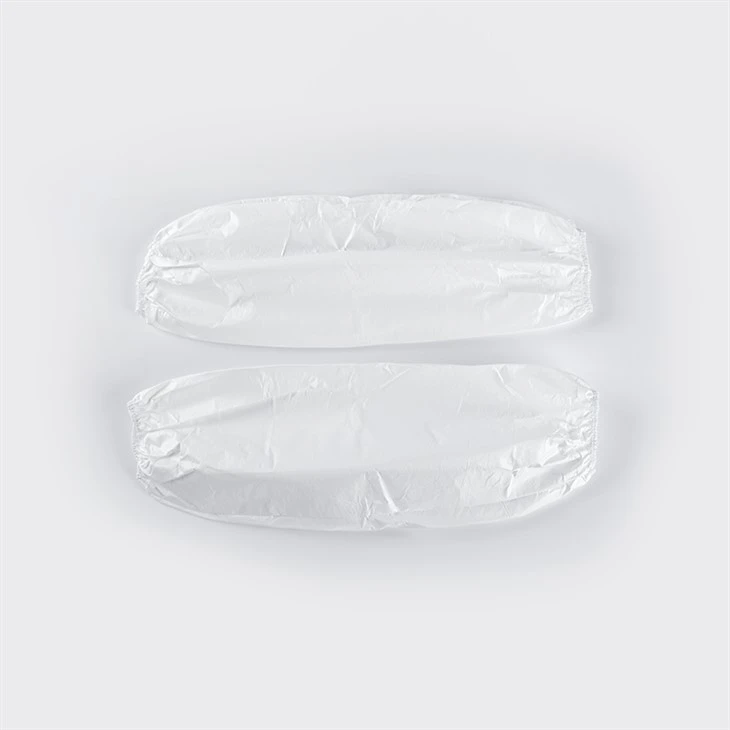
The abrasion resistance of these sleeves depends on a few key factors. One of the most important ones is the type of non - woven fabric used. There are different types of non - woven materials, such as spunbond, meltblown, and needle - punched. Spunbond non - woven fabrics are made by extruding molten polymer filaments and then bonding them together. They tend to have a relatively good level of abrasion resistance because the long, continuous filaments provide some strength. For example, in an industrial environment where workers need to handle rough materials, spunbond disposable non - woven sleeves can hold up pretty well against minor abrasions.
On the other hand, meltblown non - woven fabrics are made by blowing hot air through molten polymer to create fine fibers. These fibers are very short and randomly arranged, which makes the fabric less resistant to abrasion compared to spunbond. Meltblown non - woven sleeves are often used in applications where filtration or softness is more important than abrasion resistance, like in some medical or cosmetic applications.
Needle - punched non - woven fabrics are created by mechanically interlocking fibers with barbed needles. They can have a decent amount of abrasion resistance, especially if the fibers are thick and densely packed. However, they might not be as smooth as spunbond fabrics, which could affect their performance in some situations.
Another factor that affects abrasion resistance is the thickness of the non - woven sleeve. Thicker sleeves generally offer better abrasion resistance. A thicker layer of fabric means there's more material to absorb the friction and prevent it from wearing through the sleeve. For instance, our Disposable Thickened Dust - proof Non - woven Sleeve is designed with a bit more thickness to handle tougher conditions and provide better protection against abrasion.
The surface texture of the sleeve also plays a role. If the sleeve has a smooth surface, it's less likely to catch on rough edges and cause abrasion. But if the surface is rough or has a lot of texture, it might be more prone to wear and tear. Some non - woven sleeves are treated with special coatings or finishes to improve their surface smoothness and thus their abrasion resistance.
In real - world applications, the level of abrasion resistance needed varies widely. In a light - duty cleaning job, like dusting furniture, a disposable non - woven sleeve with a lower level of abrasion resistance might be perfectly fine. The sleeve just needs to protect the hand from a little bit of dust and minor contact with surfaces. But in a heavy - duty industrial setting, such as a construction site or a metal - working shop, workers need sleeves that can withstand more intense abrasion. They're going to be handling rough materials, tools, and equipment, so the sleeves need to be more durable.
Let's take a look at some specific examples. In the automotive industry, workers who are assembling parts often use disposable non - woven sleeves. These sleeves need to be resistant to abrasion because they're constantly rubbing against metal parts, plastic components, and other rough surfaces. If the sleeves aren't abrasion - resistant, they'll quickly wear out, which can be costly for the company as they have to keep replacing them.
In the food processing industry, disposable non - woven sleeves are used to maintain hygiene. While the level of abrasion resistance needed might not be as high as in an industrial setting, they still need to be able to withstand some normal handling and contact with food processing equipment. For example, workers who are slicing and dicing vegetables or handling meat need sleeves that won't tear easily during the process.
So, how can you tell if a disposable non - woven sleeve has good abrasion resistance? One way is to look at the product specifications provided by the supplier. Reputable suppliers like me will usually include information about the type of non - woven fabric, the thickness, and the expected level of abrasion resistance. You can also ask for samples and test them in your own specific application. Try rubbing the sleeve against the surfaces it'll be in contact with in your work environment and see how well it holds up.
If you're in the market for disposable non - woven sleeves and abrasion resistance is a key factor for you, it's important to choose the right product. You need to consider your specific needs, the type of work you'll be doing, and the environment in which the sleeves will be used. Don't just go for the cheapest option; make sure you're getting a sleeve that can actually do the job.
As a supplier of disposable non - woven sleeves, I understand the importance of providing high - quality products. I've spent a lot of time researching and working with different non - woven materials to develop sleeves that offer the best balance of abrasion resistance, comfort, and affordability. Whether you need sleeves for industrial use, medical applications, or something else, I've got a range of options to meet your needs.
If you're interested in learning more about our disposable non - woven sleeves or have any questions about abrasion resistance or other product features, don't hesitate to reach out. I'm here to help you find the perfect sleeves for your business. Let's have a chat and see how we can work together to get you the right products at the right price.
References:
- Textile Handbook: Non - woven Fabrics. A comprehensive guide on non - woven materials and their properties.
- Industrial Applications of Non - woven Products. A research paper on the use of non - woven products in different industries.